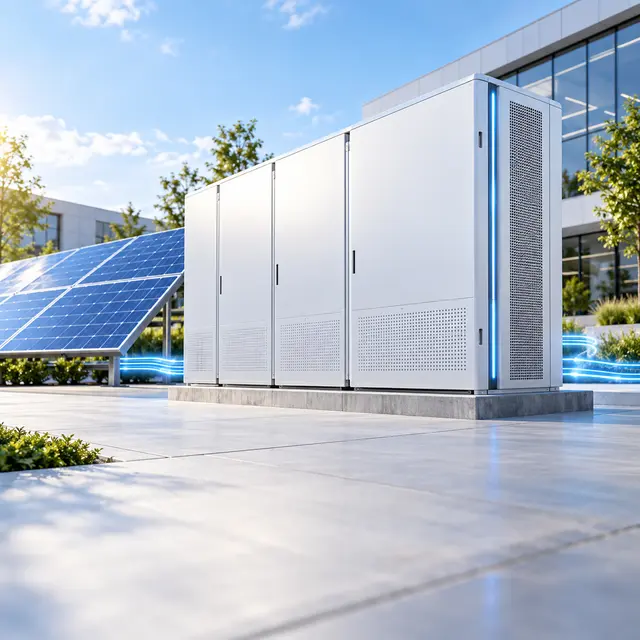



- Solar generation
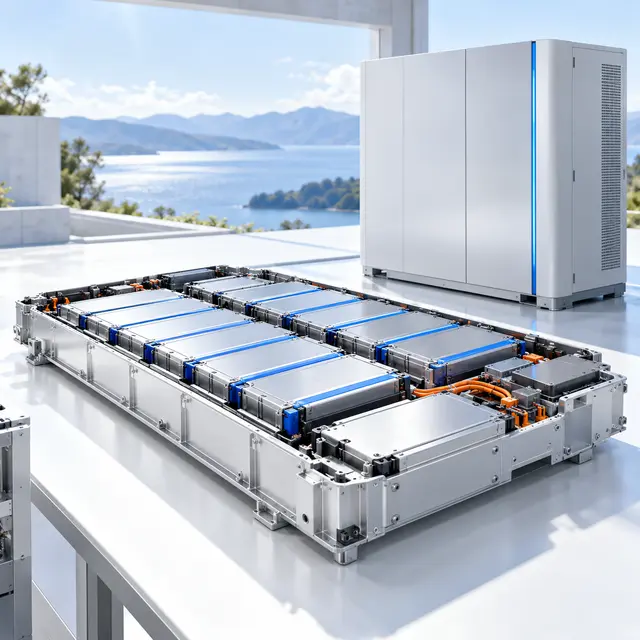
- Battery storage
- Site use or eligible export
01 / Intelligent Energy
Store power for the right time.
Use a battery to store solar or lower-cost electricity. Plan when to use it and assess eligible export.
Explore intelligent energy Let’s talk
ENERGY FOR HOMES, BUSINESSES AND FLEETS
Use electricity at better times, charge fleets for their next shift and recover value from retired batteries and server heat.
THE FOUR SERVICES
Start with a goal. A battery can support a home or a depot, and suitable retired EV batteries may provide that storage. Where computing fits a site, its heat can serve another purpose nearby.
Use a battery to store solar or lower-cost electricity. Plan when to use it and assess eligible export.
Explore intelligent energyShare available depot power and plan charging around departures and electricity prices.
Explore ev fleet chargingAssess retired EV modules for reuse as stationary storage and route unsuitable material for recovery.
Explore circular batteriesUse suitable electrical capacity for computing and recover server heat for local hot water or heating.
Explore compute & heat recoveryFOR FLEET OPERATORS
Vehicles need enough charge for the next shift. Your depot has a limit on how much power it can draw. A better charging plan works around both.
UNDERSTAND THE VALUE
Explore a solar and battery scenario, or check whether your fleet’s charging demand fits the time and power available.
FROM FIRST CONVERSATION TO A PLAN
Before you commit, understand what is proposed, who will deliver it and how the costs and potential benefits have been assessed.
Start with the equipment, electricity use and priorities you already know.
Check compatibility, practical limits and the costs and benefits of each route.
Set out equipment, responsibilities, commercial terms and delivery milestones.
A LITTLE MORE CLARITY
No. A fleet may only need charging planning. A building may benefit from battery storage. We assess each service on its own merits before connecting them.
That is a useful starting point. The exact model, software access, warranty and operating limits determine what can be supported.
No. They are comparison scenarios. Your tariff, usage, equipment and full costs need a separate assessment before a commercial proposal.
Tell us your site type and the outcome you want. You do not need a technical specification to start the conversation.
THE PRACTICAL DETAILS
A tariff and a meter tell different stories. The tariff tells you when electricity costs more. The meter tells you when you actually use it. Looking at both helps identify work you can move, electricity you can store and equipment that must run on schedule.
Explore energy optimisationSolar can serve demand directly. A battery can hold energy for later. A depot can share power across vehicles. Where equipment and contracts allow it, the controls can coordinate these decisions around what matters most on site.
Plan around your siteA suitable vehicle battery can spend its second life storing energy. A computing installation can deliver useful work and supply recoverable heat. Each needs a case of its own, with a customer for the service and a clear owner for the equipment.
Why we bring these togetherYOUR NEXT STEP
Tell us what you have and what you want to improve. We’ll help you identify the right next step.